In 1967, Tom Anderson was studying at UC Berkeley when he was exposed to Eastern religions and the consciousness-expanding zeitgeist of the 60s. As a result, he found a way to travel across Asia through India and Nepal. “Deep travel like this has the power to reveal the connected humanity of people everywhere,” he said.
With headliners that included Lucinda Williams and Seth MacFarlane as host, San Francisco’s August Hall lived up to its name when Larry Brilliant’s 80th birthday celebration rolled onto its stage on August 24.
Along with BFF Wavy Gravy and his wife Jahanara Romney, Larry and Girija Brilliant, and a few hundred friends and colleagues filled the venue with what can only be described as love. Jai and Ezra Uttal, Krishna Das, and Salman Ahmed spun their special magic as they strummed and sang. Seth MacFarlane crooned songbook favorites and made the entire house – performers and audience – feel like part of the Seva community.
Wavy Gravy and a few hundred friends are in the building!
Taj Mahal and Maria Muldaur. Photo by Bob Minkin
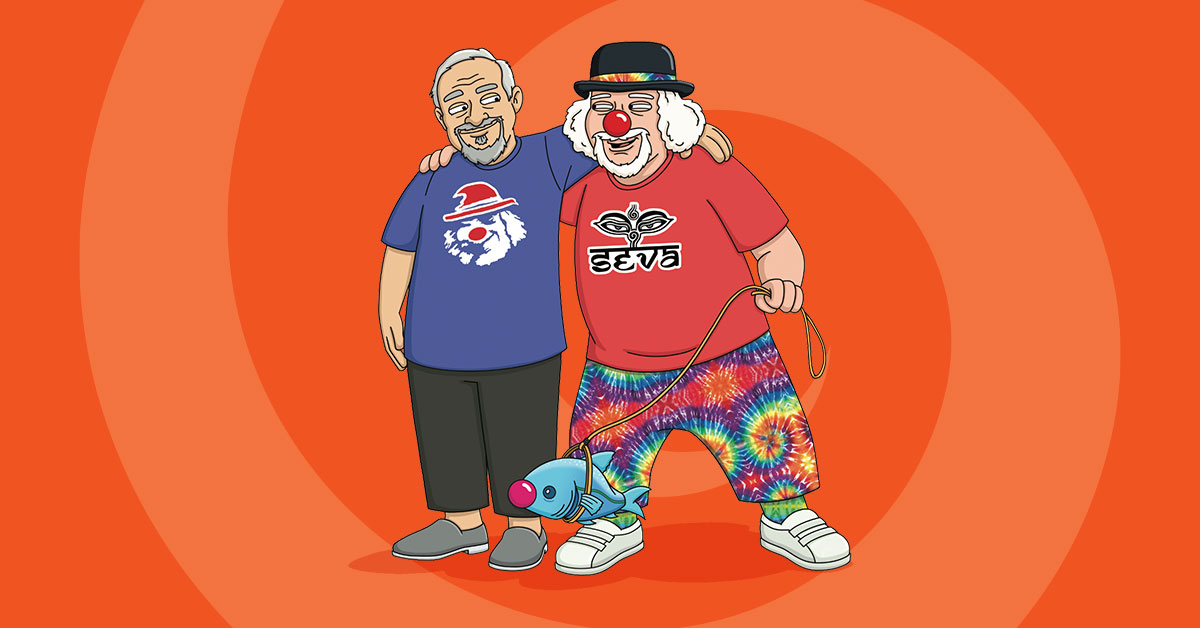
They came in plaid. They came in voluminous pants and retina-searing tie dye, often as one outfit. They convened to celebrate a man known for his Woodstock quote but famous for his huge heart. Wavy Gravy’s birthday concert benefiting Seva was a good old-fashioned lovefest, brimming with soul. And bubbles.
It’s 1978 in Michigan. A clown, a guru, and a doctor walk into a cabin. The clown says, “What I have in mind is eye care for 400,000.” The guru says “See here now.” The doctor says, “Brilliant. We can do that.”
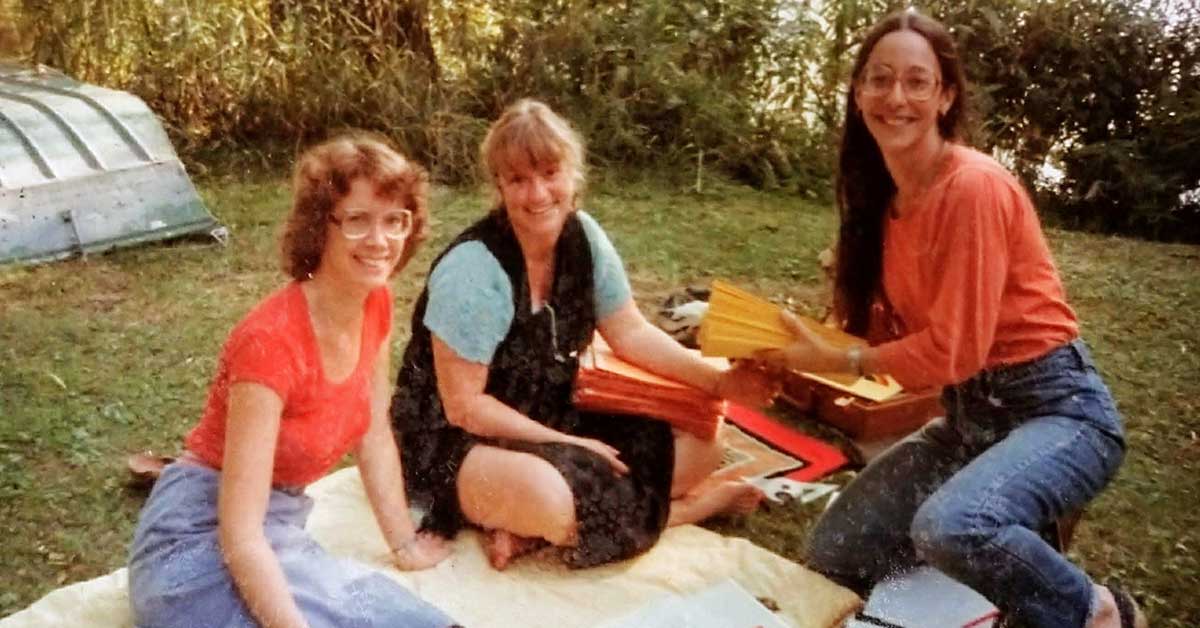
You already know that love sparks a lot of goodness. When we sprinkle it around, and put our love into action, the world becomes better. And you do it through Seva everyday! Did you know that many of the ‘Originals’ who jump started our mission were also couples in love? The love they carried for each other was put into action towards a greater cause – spreading joy.
This Valentine’s Day, meet a few of these Seva Sweethearts:
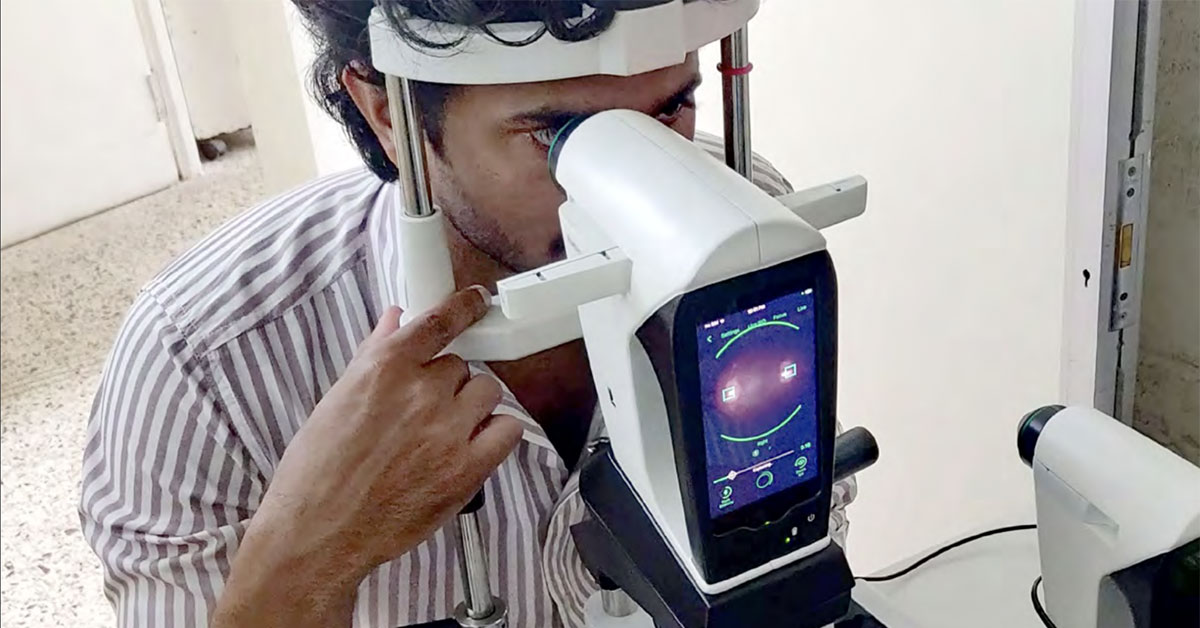
Photo: Pristine 5.0 Retinal Camera (formerly Vistaro) in action.
When you think of “disruptive and revolutionary tech,” what comes to mind?
Major companies, start-ups, a laboratory on the brink of discovery – but what about nonprofits?
You read that right, nonprofits. We know nonprofits don’t often come top of mind as being “disruptive,” but we’re here to paint a new picture. Compassion has always been an important driver of innovation at Seva.
At Seva, we invest in a suite of cutting-edge and revolutionary technologies to create a world free of avoidable blindness. Leveraging millions of data points, four decades of experience, and a network of leading public health experts, engineers, and physicians, our best-in-class tech solutions revolutionize the way eye care is delivered worldwide.
“We operate at the scale of a major corporation and the nimbleness of a start-up. Straddling this balance is disrupting the future of ophthalmology and public health – for good”.
– Kate Moynihan, Executive Director, Seva Foundation.
This is the new frontier of compassion driven eye care tech that you support:
And we’re back…with another Seva Quiz! Ever wonder about the people, places, and solutions that guide our work? Well, look no further! We asked our team, dug our archives, and have a brand new & fun game of trivia to see how well you know the magic that makes Seva possible.
We know eye health affects nearly everyone at some point in our lives. Worldwide, there are currently 1.1 billion people living with vision impairment, and hundreds of millions more have ongoing eye care needs.
Improved eye health is essential to achieve the United Nations’ Sustainable Development Goals (SDG for short). That means eye health is critical to achieving goals related to poverty, hunger, education, gender equality, and decent work, in addition to overall health and wellbeing. A Lancet Commission Report released earlier this year noted that the economic impact of vision impairment is massive, with a current estimated productivity loss of $411 billion per year globally.
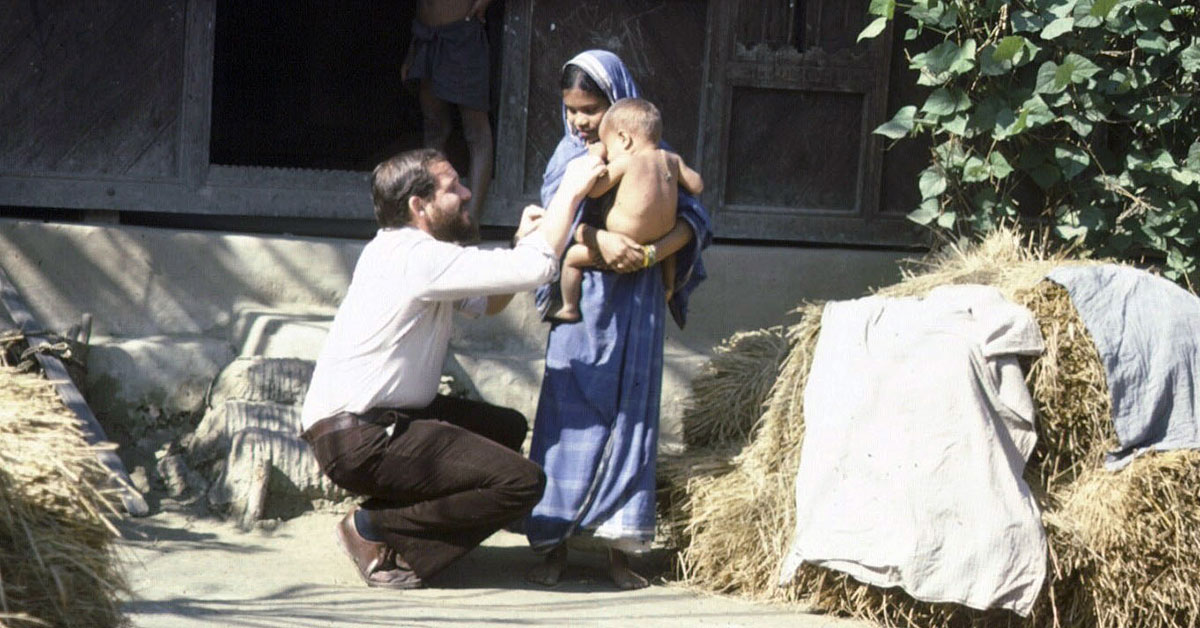
Larry Brilliant examines a baby with one of the world’s last cases of the most deadly form of smallpox, Bihar, India, 1975. Photo credit: Nedd Willard
“If we think of Covid-19 as a wildfire – and it surely spreads like one – we have failed to extinguish it. We still have fires burning all over the country,” says Dr. Brilliant, a world-renowned epidemiologist.
Dr. Brilliant together with W. Ian Lipkin, Lisa Danzig, and Karen Pak Oppenheimer published an article in the Wall Street Journal today. They discuss what’s to come next for the pandemic with new variants, vaccines, and planning for future public health challenges. The message is clear: We can still beat COVID-19 using many of the strategies leveraged in the past to deal with Smallpox, Ebola, Swine, and other viruses, but we must act fast and in concerted efforts.