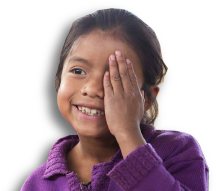
Nine-year-old Sarun lives in Puok, a district in Siem Reap where the light is bright and unfiltered, and where childhood is stitched together from schoolbooks, cousins, and the long absence of parents working far away.
He is a third grader, and has done some serious thinking about the world. Before his surgery, cataracts clouded his vision, softening the chalkboard into a blur and turning his beloved mythology stories into puzzles of guesswork.
“Without eyes,” he explained, “the whole body is dead. It’s like a boat without an oar.”
There is something remarkable about a nine-year-old who reaches instinctively for metaphor.
When he arrived at Angkor Hospital for Children, he approached the idea of surgery the way he approaches most things — with reason. There would be an injection, he noted, to numb the pain. This seemed sensible. Acceptable.
Afterward, when the patch was removed, the world reassembled itself. Now he can see the board. He can focus. He has been certain, since the age of five, that he will become a doctor, so he can treat and help patients.
In the days following surgery, he made an important purchase: a pair of sunglasses. They are comfortable, and, equally critical, “I look very handsome with them.” His friends, a reliable jury, agree.
These days, Sarun studies with purpose. He wrestles with friends. He referees the occasional fish fight with the air of someone accustomed to settling serious disputes. The world, once dimmed, is now vivid and negotiable.
A boat with an oar. A boy with sight.
The future, which had been a blur at the edges, has come sharply into focus — and Sarun, steady-handed,
is already steering.